

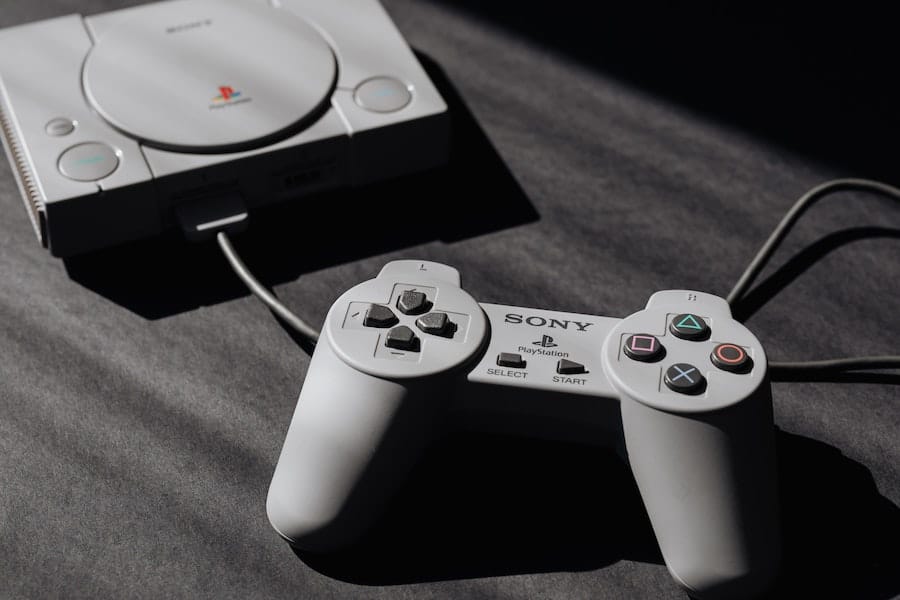
Have you ever wondered if you could use an Xbox controller with your PlayStation 4? Whether you’re an avid gamer or a casual one, you may have noticed that the two consoles have different gaming controllers. While it’s true that each console is designed to be used with its own specific controller, you may be surprised to learn that there is indeed a way to connect an Xbox controller to your PS4. In this comprehensive guide, we’ll show you how you can use your Xbox controller with your PlayStation 4 and give you the information you need to make the most of your gaming experience.
Can You Connect A Xbox Controller To A Ps4?
Yes, You Can Connect An Xbox Controller To A PS4. You’ll Need A Bluetooth Adapter For The Xbox Controller, And Then You Can Just Follow The Instructions For Pairing It With The PS4.
How To Connect A Xbox Controller To A PS4?
Set Up Your Xbox Controller
Before you can connect your Xbox controller to your PS4, you’ll have to set it up and make sure it’s ready to go! Here’s what you need to do: Press the Xbox button on the top of your controller to turn it on. Hold down the “B” and “X” buttons on the front of your controller to put the controller in discovery mode. Go to “Settings” and select “Devices” from the menu on your PS4. Select “Bluetooth Devices” from the “Devices” menu. Select “Wireless Controller” from the list of Bluetooth devices.
Connect Your Xbox Controller to Your PS4
Now it’s time to actually connect your Xbox controller to your PS4! Here’s what you need to do: Hold down the “Share” and “PS” buttons on your PS4 controller. Select “SteelSeries” from the list of devices on your PS4. If you don’t see “SteelSeries” as an option, try again, but this time don’t hold down the buttons as you select “SteelSeries.” Instead, just select it normally. Once you’ve connected your Xbox controller to your PS4, make sure it’s set to “Connected” in the “SteelSeries” menu.
Set Your PS4 to Allow Connections
Before you connect your Xbox controller to your PS4 with a wired connection, you’ll need to make sure your PS4 is set to allow connections. Here are what you need to do: Select “Settings” from the main PS4 menu. Select “Devices” from the “Settings” menu. Select “USB Devices” from the “Devices” menu. Make sure you check the box next to the “Connect USB Devices While the System is in Sleep Mode” option.
Connect Your Xbox Controller to Your PS4 Using a USB Cable
Now you can go ahead and connect your Xbox controller to your PS4 with a USB cable! Here’s what you need to do: Connect one end of the USB cable to the USB port on your PS4 controller. Connect the other end of the USB cable to the “USB” port on your Xbox controller. Once you’ve connected your Xbox controller to your PS4, make sure it’s set to “Connected” in the “USB Device” menu.
Update Your Xbox Controller
Before you can connect your Xbox controller to your PS4 with a wireless connection, you’ll need to make sure your controller is updated to the latest version. Here’s what you need to do: Make sure your controller is connected to your PS4 with a USB cable. Select “SteelSeries” from the menu on your PS4. Select “Settings” from the menu on your PS4. Select “Update Device” from the “Settings” menu. Wait for your controller to update, then select “Ok” to close the menu when you’re done.
Set Up the Bluetooth Connection
Now it’s time to set up the Bluetooth connection between your PS4 and your Xbox controller! Here are what you need to do: Select “Settings” from the main PS4 menu. Select “Devices” from the “Settings” menu. Select “Bluetooth Devices” from the “Devices” menu. Select “Wireless Controller” from the list of Bluetooth devices. Once you’ve connected your Xbox controller to your PS4 with a Bluetooth connection, make sure it’s set to “Connected” in the “Bluetooth Devices” menu.
Connect Your Xbox Controller to Your PS4 Over Bluetooth
Now it’s time to connect your Xbox controller to your PS4 over Bluetooth! Here’s what you need to do: Hold down the “Share” and “PS” buttons on your PS4 controller. Select “Wireless Controller” from the list of devices on your PS4. Once you’ve connected your Xbox controller to your PS4 with a Bluetooth connection, make sure it’s set to “Connected” in the “Bluetooth Devices” menu.
Update Your PS4’s System Software
Before you can actually use your Xbox controller to play games on your PS4, you’ll need to make sure your PS4’s system software is up to date. Here are what you need to do: Select “Settings” from the main PS4 menu. Select “System” from the “Settings” menu. Select “System Software Update” from the “System” menu. Select “Update Using Internet” from the “System Software Update” menu. Wait for your PS4 to update, then select “Ok” to close the menu when you’re done.
Check Your Xbox Controller
Now that you’ve connected your Xbox controller to your PS4, it’s time to check and see that everything is working correctly! Here’s what you need to do: Select “SteelSeries” from the menu on your PS4. Select “Settings” from the menu on your PS4. Select “Connected Device” from the “Settings” menu. Select the device you’d like to check from the list. If your controller is not connected, select “Disconnect” from the menu at the bottom of the screen. If your controller is connected, make sure it’s set to “Connected” in the menu.
Benefits Of Using A Xbox Controller On A PS4
1. Better Controls
Although the PS4 controller is perfectly fine to use, the Xbox controller has better ergonomics and is more comfortable to hold. The analog sticks are also bigger and more comfortable to use, especially if you have big hands. It’s also easier to hold down multiple buttons at once on the Xbox controller compared to the PS4 controller.
2. Better Compatibility
The Xbox One uses an updated version of Microsoft’s proprietary wireless protocol, which means that most of its controllers are better suited for use with PCs than Sony’s DualShock 4 controllers are. This includes both wired and wireless connections! This is especially true if you’re using a PC with a USB 3.0 port, as it can handle faster speeds than USB 2.0 can offer. You can also connect your Xbox One controller to your PC via Bluetooth, so there’s no need for an extra dongle in order to get up and running.
3. Better Support
Microsoft’s Xbox One controller is more widely supported than Sony’s DualShock 4 controller is. Most of the games that support the DualShock 4 also support the Xbox One controller, but many of them require you to download and install a patch in order to play with an Xbox One controller instead of a DualShock 4 controller. This could be an issue if you don’t have access to a PC or if you don’t have enough storage space on your PS4 to download and install the patch file.
4. Better for Fighting Games
Although the DualShock 4 is perfectly fine for fighting games, the Xbox One controller is better suited for them. The Xbox One controller has better triggers and bumpers than the DualShock 4 does, which makes it easier to perform combos in games like Street Fighter V and Injustice 2. It also has a dedicated menu button that you can use to access the pause menu in-game, which makes it easier to access things like your inventory while you’re playing.
5. Better for Racing Games
The ergonomics of the Xbox One controller make it more comfortable to hold while you’re racing around a track in Forza Motorsport 7 or Gran Turismo Sport. The triggers are also slightly larger than they are on a DualShock 4 controller, so you get more travel out of them when using your brakes or gas pedal. This makes it easier to control your vehicle with precision!
Disadvantages Of Using A Xbox Controller On A PS4
1. More Expensive
If you want to use an Xbox One controller on your PS4, you’ll have to purchase a third-party adapter in order to do so. These adapters are usually around $30, and they’re not always compatible with every game that supports the DualShock 4. The Xbox One controller itself costs $60, which is $20 more than a DualShock 4 controller costs.
2. No Vibration Feedback
The Xbox One controller doesn’t vibrate when you press down on the triggers or bumpers, which can make it harder for you to know if your attacks are connecting with your opponent in fighting games like Street Fighter V or Injustice 2. It also doesn’t rumble when you get hit! This is one of the biggest drawbacks of using an Xbox One controller over a DualShock 4 controller on the PS4.
3. No TouchPad
The Xbox One controller doesn’t have a touchpad, which means you can’t use it to perform quick-time events or other touch-based actions in games like Resident Evil 7 or Horizon Zero Dawn. It also means that you can’t map buttons to the touchpad, which makes it harder for you to play games that require you to hold a button and swipe across the touchpad at the same time (like Street Fighter V).
4. More Difficult for Games That Use Motion Control
The DualShock 4 has a built-in gyroscope, which makes it easier for developers to add motion control features to their games. The Xbox One controller doesn’t have a gyroscope, so some games will be unable to use motion control if they require one. This could be an issue if you want to play something like Batman: Arkham VR on your PS4!
Conclusion
If you’ve ever wondered if you could use an Xbox controller with your PlayStation 4, you now have your answer. The two consoles might look different, but they actually have a few things in common, and one of those is that you can use an Xbox controller to connect an Xbox controller to a PlayStation 4. If you already own an Xbox controller or you are interested in purchasing one, you now know that you can use it with your PS4.